while you are eating a piece of bread


While you are eating

a piece of bread, try to recall

the events that collaborated to let

this take place. The ovens heat that baked

the bread, the plowed earth before that, sunlight,

rain, harvest, the winnowing, the being carried to and

from the mill, the complex idea and the build­ing of the mill

itself. The many motions of weather in the turning of four seasons.

And don’t forget the knife that cuts the bread, the metallurgy and the skill of

forg­ing that blade, and your teeth, those original grinding devices. Then there’s

your stomach digesting the crust and there’s the rest of your body being

nourished, each part in unique ways. Two hundred and forty-eight

bones, five hundred and thirty muscles, three hundred

arteries, ligaments, tendons, cartilage, your organs

and limbs, your brain. As the bread dissolves,

many intelligences within you are deciding

and peacefully agreeing on how to

divide the benefits. If there were

discord, you would feel pain

and cry out, but

you don’t.


Now notice the unified

human awareness thoughtfully

living inside your body with a soul

in communion with other spirit-intelligences.

Observe how it sits at the junction of two worlds as

a human being looking with kindness on other human

beings. Some say this is the cul­mination of the body’s long

development and the beginning of the next transformation,

that you that live with gratitude for food and thank­fulness

also for any difficulty, pain, or sudden disappointment,

seeing those too as grace, that you live inside and

outside time as an angelic breadeating witness

taking in this myriad convergence of

providential motions and that you

are in yourself an individual

soul being made from

divine wisdom.


Bahauddin, father of Rumi

the drowned book


three inches of tongue


Why practice quiet sitting?

So you can really get a look

At your original mind.

You look at it coming, look at it going,

And then you know you’re the original person.

This latter age has no deep faith,

No one practices the

Direct road to understanding.

All they do is flap three inches of tongue

And lose themselves in the muddle of the mind.


Gensei


to further what is good and true

purified


To lead others toward the

good, one must purify

one’s own character.

 
The I Ching teaches that the world cannot move toward harmony and well-being unless human beings act in unison to further what is good and true. Our power as individuals is multiplied when we gather together as families, groups, and communities with common goals. It is our collective strength that makes positive change possible in the world. However, the tremendous power of human collectives must be directed by a qualified leader. The hexagram Ts’ui encourages you to develop your character into that of a leader.

Before a person may gather others together to achieve good, he must first gather together within himself proper principles. A leader who is not balanced and collected within himself will always be suspected by his followers, and in the hour when he needs them most, they will hesitate. Therefore the first task of the potential leader is to accumulate in his own character all that is good and true and correct.

In a very real sense the progress of the world depends upon your thoughts as an individual now. Concentrate, then, on examining and correcting your thoughts, attitudes, and actions. Improve yourself into the kind of person you yourself would follow wholeheartedly and without hesitation. Learn to accept the natural progress that occurs when you act in harmony with proper principles, and seek no progress at the expense of those principles. Train yourself to avoid misfortunes by anticipating them in advance.

By purifying your character in this way and clinging steadfastly to higher things, you lead yourself and others toward well-being and good fortune.
 

The I Ching, or Book of Changes

Hexagram 45 / Ts’ui (Gathering Together)


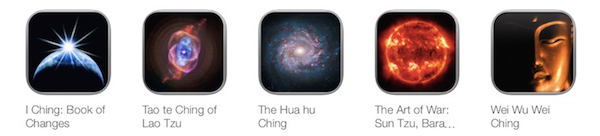
ebooks & apps of the Tao the Ching, I Ching,

Wei wu Wei Ching, Hua hu Ching, and

Art of War for iPad/Phone, Kindle,

Nook, or Android


You

can now buy

the I Ching as part of a

five-app bundle of Taoist classics 

for iPhone or iPad for less than

the cost of one hardcover

book.

brian browne walker taoist app bundle ios ipad iphone