how can it be taken by force?

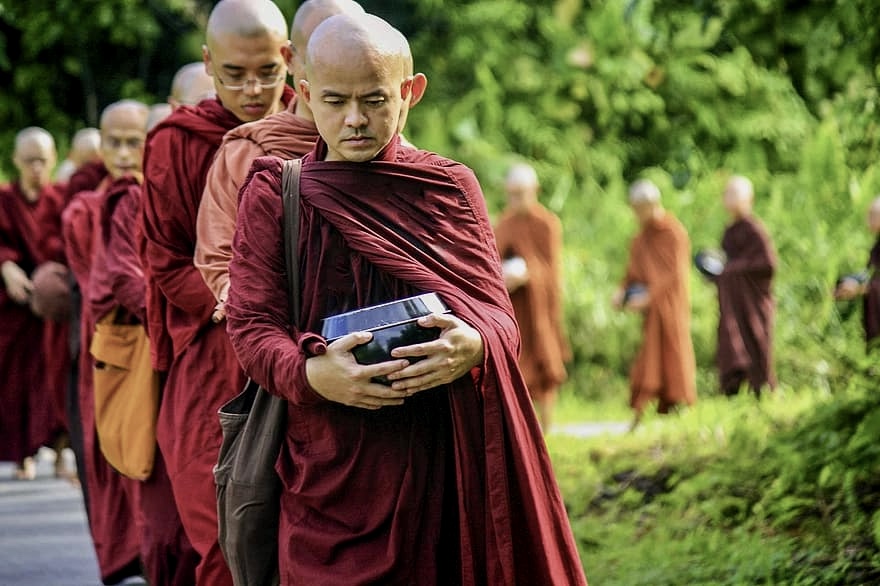
one robe, one bowl

 
Having left the Fifth Ancestral Teacher’s place, Hui Neng traveled south for two months, and had reached the Ta Yu Range. He was pursued by the monk Hui Ming, who was originally a general, accompanied by several hundred men, who wanted to seize the robe and bowl (emblematic of succession to the ancestral teachers).

Ming was the first to overtake him. The Sixth Ancestral Teacher threw down the robe and bowl on a rock and said, “This robe signifies faith: how can it be taken by force?” Ming tried to pick up the robe and bowl, but was unable to move them. At that point he said, “I have come for the Dharma, not for the robe.”

The Ancestral Teacher said, “Since you’ve come for the Dharma, you should put to rest all your motivations, and don’t give rise to a single thought, and I will explain for you.” After a silence, he said, “Without thinking of good, and without thinking of evil, at just such a time, which is your original face?”

At these words, Hui Ming was greatly enlightened. He also asked, “Besides the intimate words and meaning that struck home a moment ago, is there any further intimate message?”

The ancestral teacher said, “If it were said to you, it wouldn’t be intimate. If you turn around and reflect, what’s intimate is in you.”
 

Dahui

i don’t know

🪷


the ultimate path is not one-sided

acey harper


The Ultimate Path is not

one-sided, the Final Truth is not biased.

We must not seize upon the views of just one

of these approaches. We must understand

them as one and make them all

perfect and wondrous.


In essence,

if you are confined to one

of them, they are all wrong; if you

reconcile them, they are all correct.

Forget sentiments and return

to the ocean of

wisdom.
 

Records of the Teachers and Students of the Lanka

full text here


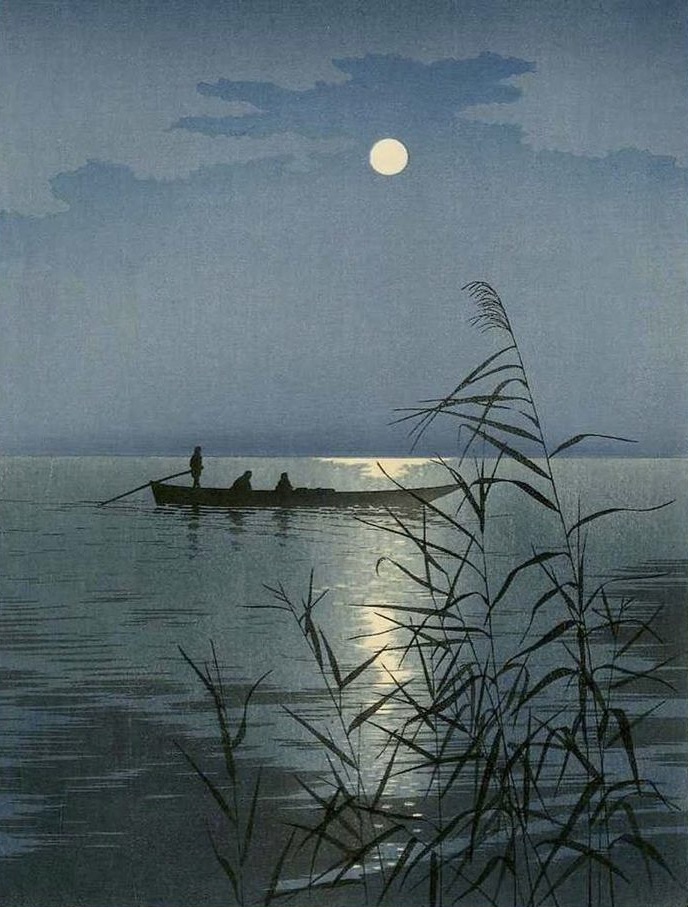
like the moon reflected in water

koho shoda


My teaching

which has come down

from the ancient Buddhas

is not dependent on meditation

(dhyana) or on diligent application

of any kind. When you attain the insight as

attained by the Buddha, you realize that Mind is

Buddha and Buddha is Mind, that Mind, Buddha,

sentient beings, Bodhi (enlightenment),

and Klesa (passions)  are of one and

the same substance while

they vary in names.


You should know that

your own mind−essence is neither subject

to annihilation nor eternally subsisting, is neither

pure nor defiled, that it remains perfectly undisturbed and

self−sufficient and the same with the wise and the ignorant, that it

is not limited in its working, and that it is not included in the

category of mind (citta), consciousness (manas), or

thought (vijnana). The three worlds of desire,

form, and no−form, and the six paths

of existence are no more than

manifestations of your

mind itself.


They are all like the moon

reflected in water or images in the

mirror. How can we speak of them as being

born or as passing away? When you come

to this understanding, you will be

furnished with all the things

you are in need of.

 
Shih−t’ou
 

buddha has gotten into your nostrils

here is what a buddha is

 
Master Ciming said to an assembly, “The body of reality is formless; it manifests forms in response to beings.”

(Dahui holds up his staff.) This is a staff — what is the reality body? Leaving this complication aside, the communal hall and Buddha shrine have gotten into your nostrils, the waters of the four great oceans are on your heads, the dragon kings are under your fingernails — do you feel them? 

If you feel them, you go three thousand by day, eight hundred by night, smoke rising under your feet, fire rising on your heads. If you don’t know, eat when hungry, sleep when tired.

(Dahui planted his staff once.)
 

Dahui